(Japanese/English)

In human learning, answering questions is an essential function of intelligence. Just as people accumulate knowledge by reading textbooks and then solve problems in examinations, artificial intelligence reads vast amounts of text in order to perform question answering (QA). Recent large language models (LLMs), such as ChatGPT, carry out this QA task and hold conversations in a remarkably human-like manner by predicting the next word on the basis of enormous collections of previously written text.
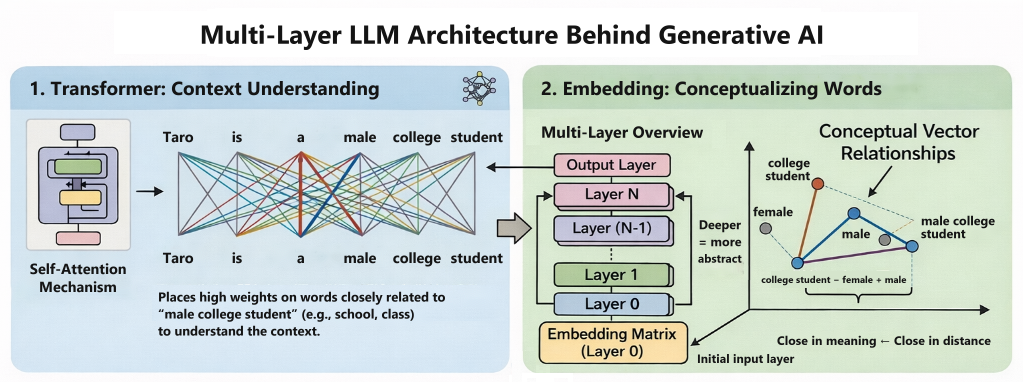
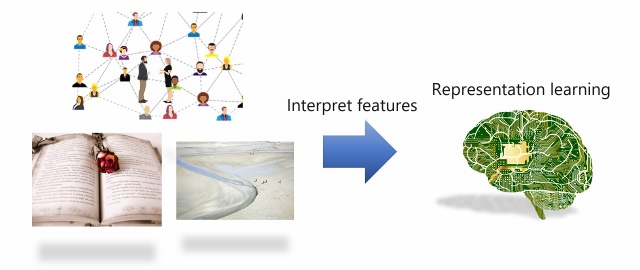
This intelligence is underpinned by deep learning. Deep learning is a family of learning algorithms modeled on the neural circuitry of the human brain. It automatically learns representations (features) that allow computers to handle not only images and speech but also the complex meanings and contexts carried by language, a process known as representation learning. By applying this technology, LLMs learn the semantic relationships among words in depth and are thereby able to produce fluent natural language comparable to that of humans.
The Kaneiwa Laboratory employs deep learning and related technologies to study knowledge representation and reasoning in artificial intelligence. A distinguishing feature of our work is that we focus not on image and speech data, which correspond to the human eyes and ears, but on semantic data themselves, namely language and knowledge, which lie at the core of thought. Although other laboratories at the University of Electro-Communications also conduct research on AI, our laboratory is characterized by its in-depth investigation of the meaning of human language and the mechanisms of logic.
Why is it difficult to learn from language and knowledge? Humans derive answers by understanding the relationships among concepts, that is, by reasoning, whereas for AI, words tend to be nothing more than sequences of symbols. Because language cannot be converted into numerical values as straightforwardly as image data, it is far from easy for AI to genuinely understand meaning and to reason correctly. We focus on the semantic structure of language, which may be likened to a map of knowledge, and enable AI to learn linguistic concepts through embeddings of that structure, with the aim of realizing artificial intelligence capable of logically sound reasoning.
Artificial intelligence (AI) is a field of research that aims to develop computers capable of human-like intelligent information processing. How, then, do humans perform intelligent information processing? Humans use their brains to acquire knowledge from other people and from their environment, and they carry out intelligent activities on that basis. Moreover, humans create and discover new knowledge that did not previously exist.
After working at Fujitsu Limited for three years and subsequently completing graduate studies, Professor Ken Kaneiwa was engaged for approximately ten years in theoretical research on knowledge representation and reasoning in artificial intelligence at the National Institute of Informatics (under the Ministry of Education, Culture, Sports, Science and Technology) and the National Institute of Information and Communications Technology (under the Ministry of Internal Affairs and Communications). This was followed by three years at Iwate University and then by the present appointment at the University of Electro-Communications.
Our laboratory deals with knowledge, which is indispensable for intelligent information processing. With a view to realizing artificial intelligence, we conduct fundamental research on the following questions concerning knowledge.
First, research on knowledge acquisition investigates how a computer can identify meaningful knowledge in information obtained from external sources. Second, research on knowledge representation investigates how the acquired knowledge should be expressed on a computer; this topic is also closely related to database research. Finally, research on reasoning and learning from knowledge investigates mechanisms for deriving new facts from the acquired and represented knowledge and for learning regularities and patterns from it. Students who wish to pursue research in artificial intelligence are warmly invited to join the Kaneiwa Laboratory.
Knowledge representation and reasoning is an area of fundamental research that enables robots and computers to make use of knowledge. It explores how the meaning of knowledge can be represented in a structured form and how knowledge should be represented so that previously unknown information can be derived from it.
Fact: “UEC is located in Chofu City.”
Background knowledge: “UEC is a national university.”
“A national university is a university.”
“Chofu City is in Tokyo.”
Question: “Which universities are in Tokyo?”

A human can answer this question from the given fact. A computer (artificial intelligence), however, cannot derive the answer without the background knowledge. We therefore study how to express facts and background knowledge symbolically so that computers can process them, as well as reasoning systems that derive answers to questions from such symbolic representations.
How can artificial intelligence answer questions posed by humans? And how does it learn the knowledge from which those answers are obtained? To reason and learn as humans do, AI exploits the enormous quantities of data that exist in the world. In order to perform consistent and correct reasoning, however, knowledge specialized for each individual domain is required. An ontology is a conceptualization, formulated by humans, of the objects and events that exist in the real world, and it can represent the knowledge of a specific domain. By means of ontologies, we aim to have computers undertake tasks at which humans excel, such as decision-making, prediction, and recognition.
What kinds of knowledge, for example, are learned from data?
• Recognizing the properties of categories such as apples, cats, mammals, and airplanes
• Understanding the technical terminology of specialized domains from textual information
• Inferring and completing information that is missing from resources such as Wikipedia

As a result, artificial intelligence becomes able to learn conceptual knowledge and to infer answers to questions such as “What fruit is red and round?”, “Is a dolphin, which breathes with lungs, a mammal?”, and “Is insulin therapy effective for diabetes?”
Humans conceptualize the entities of the real world (objects and events) and thereby understand their meaning. How, then, can an intelligent computer interpret the meaning of a concept (a word)? One approach is to systematize, in the form of an ontology, the various properties and relations that hold among the concepts interpreted by humans.
Example 1: The difference between a human and a teacher
A human (an essential property) remains a human for as long as that person exists, that is, until death. A teacher (a non-essential property), by contrast, ceases to be a teacher upon leaving the profession.
Example 2: The difference between an automobile and water
In the case of an automobile (a sortal), its parts, such as the tires and the steering wheel, are not themselves automobiles. In the case of water (a non-sortal), by contrast, a portion scooped from a bucket with a cup is still water.
Humans read text and understand its meaning; conversely, they express their own opinions in writing. How can a computer understand text? To do so, it is necessary to analyze the meaning and content of the text and to represent its structure. Artificial intelligence then performs reasoning and learning on representations whose meaning and content have thus been made interpretable.
The Semantic Web realizes a future Web that can handle meaning and content rather than mere text. In other words, it seeks to move from the conventional document-centric Web toward an intelligent Web in which computers (artificial intelligence) interpret meaning and content.
The Kaneiwa Laboratory has released FROST, a database and query language system for the Semantic Web. We have independently developed, in Java, a search engine for SPARQL, the query language for graph-structured data. Whereas SQL is designed for table-based databases, SPARQL is designed for graph-structured databases, which are well suited to Web data and flexible knowledge representation, and it can be regarded as one of the NoSQL technologies. In this line of research, achievements and novelty are demonstrated by the figures obtained in experiments, which makes it a demanding field; at the same time, because the goal is simply to keep improving performance, there is no need to be uncertain about the direction of one's research.
When a computer draws a conclusion, the result is a binary choice between “true” and “false,” and when it controls a device such as an air conditioner, it distinguishes ON from OFF according to a precise numerical value (for example, 28°C). Humans, however, make vague and intuitive judgments, such as “completely true,” “almost true,” “slightly true,” “neither,” “slightly false,” “almost false,” and “completely false.” In controlling an air conditioner as well, humans decide between ON and OFF on the basis of intuitive judgments such as “hot,” “slightly hot,” “comfortable,” “slightly cold,” and “cold.”
Such vagueness is expressed by means of membership functions, which are also easy to grasp visually. For example, the speed of an automobile can be represented flexibly as follows.
HighSpeed(automobile) = 0.4
MediumSpeed(automobile) = 0.1
LowSpeed(automobile) = 0
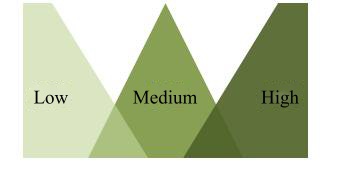
This fuzzy representation makes possible flexible reasoning and control, such as “if the automobile is traveling somewhat fast, then decelerate slightly.”
Owing to the progress made in artificial intelligence over the past several years, generative AI is now also being used in software development. For example, it is becoming possible for AI agents to program Web applications, tools, and other software solely on the basis of human instructions written in natural language.
Our laboratory conducts research on programming support technologies that make use of generative AI. Specifically, we are studying methods for efficiently modifying and extending the functionality of game software.
The following are video games currently under development with the aid of AI agents (they can be played at the university's Open Campus events). The first two show gameplay screens of a role-playing game (RPG) in which a boy defeats pirate ships; the 2D and 3D versions were created from the same specification document and ontology.

Example implementation of the 2D game “SHIPS”

Example implementation of the 3D game “SHIPS”
The following gameplay screens are from games that were programmed efficiently through AI agents on the basis of assets and a large body of specification text supplied as prompts. The first is a 3D adventure action game, and the second is a 3D adventure game.

Example implementation of the 3D game “The Calico Cat's Ancient Train”

Example implementation of the 3D adventure game “Strange World”
In addition, as shown below, we are conducting research on the preservation of old games by using AI to recreate retro games from the 1980s.
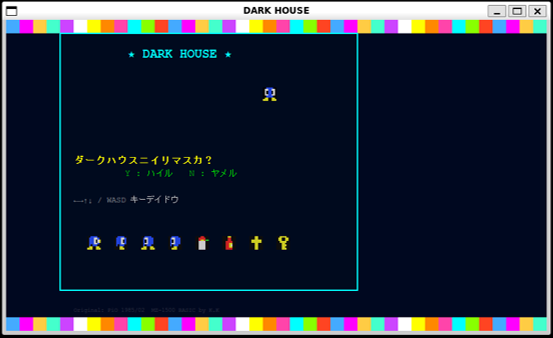
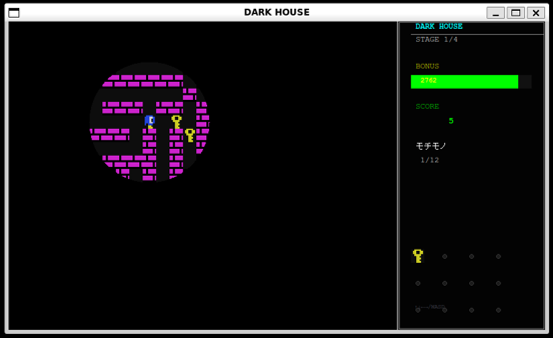
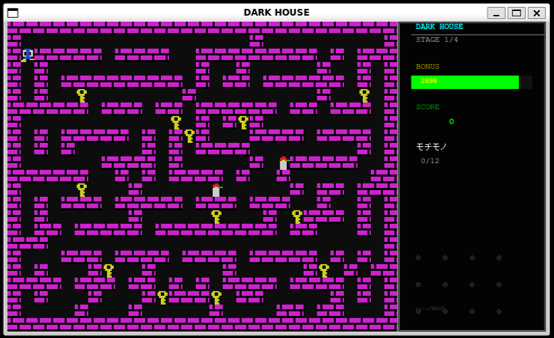
Example implementation of the game “DARK HOUSE” (April 12, 2026)
Furthermore, in the financial domain (for example, stock trading), we are considering research in which, for the analysis of corporate earnings reports and financial information, domain expertise is structured by means of the ontologies and UML diagrams that our laboratory has long worked with and is then incorporated into generative AI.
Lecture materials for undergraduate and graduate courses
Department of Computer and Network Engineering, Graduate School of Informatics and Engineering, The University of Electro-Communications
1-5-1 Chofugaoka, Chofu, Tokyo 182-8585, Japan Ken Kaneiwa (kaneiwa(at)uec.ac.jp)